 Skip to content
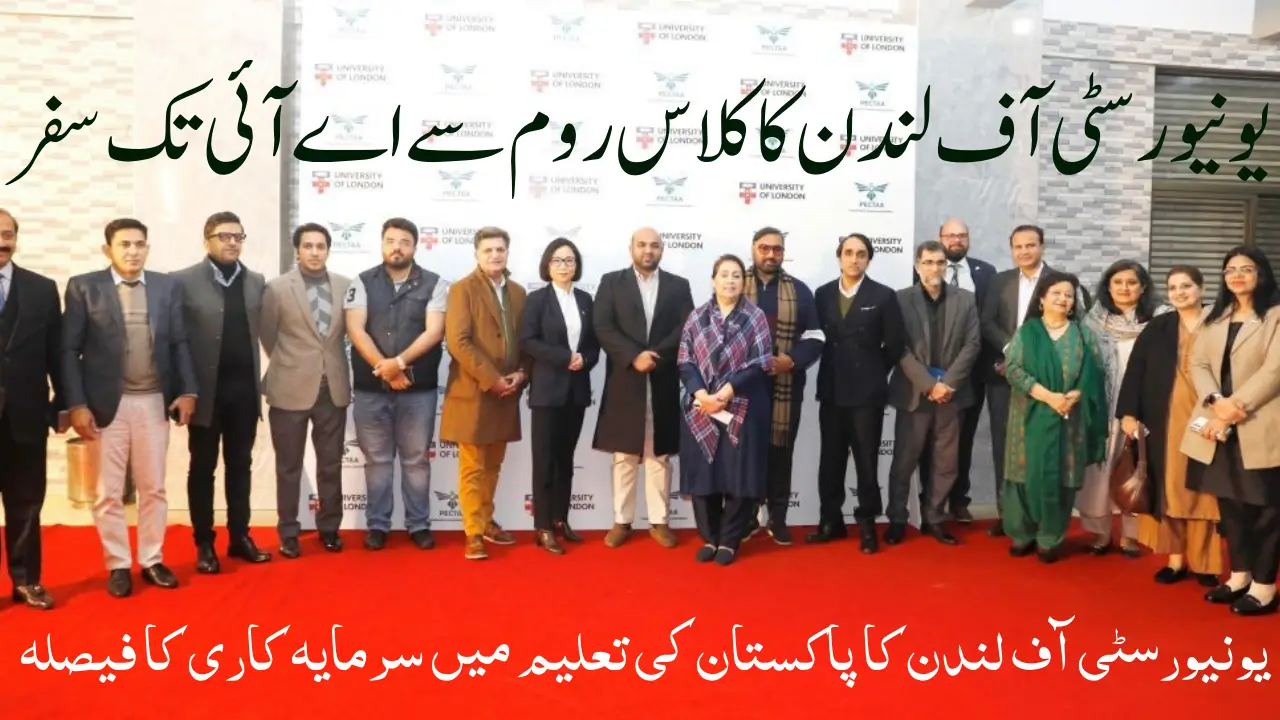
The University of London has shared a strong educational relationship with Pakistan for more than 30 years. During this time, thousands of Pakistani students have benefited from internationally recognised degrees and professional programmes. Over 16,000 students from Pakistan have graduated so far, including nearly 8,000 law graduates who now serve in law, civil service, business, and public life. Today, more than 7,000 students in Pakistan are studying through independent routes or at recognised teaching centres across many cities.

Teacher Training Programme For K–12 Educators
One of the major new initiatives is a philanthropic teacher training programme designed for K–12 educators in both public and private schools. This programme is being developed with the Punjab Ministry of Education and the Punjab Education Curriculum Training and Assessment Authority.
It will offer three professional development sessions over 12 months. The sessions will focus on reflective teaching practice, curriculum development, and classroom management. The aim is to help teachers improve learning quality at the foundational level using well-tested educational content and modern teaching methods.
Launch Of BSc Artificial Intelligence Degree
The University of London has announced a new BSc Artificial Intelligence degree that will begin in 2026. This programme is being developed in collaboration with Brunel University of London.
Students in Pakistan will be able to study this degree locally through recognised teaching centres. The programme is designed to meet growing global demand for AI experts in areas such as healthcare, finance, education, and technology. It will give Pakistani students access to world-class AI education without leaving the country.
Bespoke Law Micro-Credential For LLB Students
A special online micro-credential has also been launched for LLB students in Pakistan. This course focuses on Pakistani law and is the first of its kind designed by a foreign law programme.
It covers constitutional principles, civil and criminal codes of practice, the Pakistan Penal Code, and the law of evidence. Students can study it flexibly alongside their LLB degree. The course supports those preparing to enter the Pakistani Bar and strengthens their local legal knowledge.
Impact On Students And Workforce Demand
These initiatives are designed to support Pakistan’s education ecosystem at multiple levels. Teacher training improves classroom quality, while the AI degree prepares students for future careers in fast-growing industries.
The law micro-credential helps law students meet local professional requirements. Together, these programmes respond to workforce needs and help create skilled professionals for national development.
Ongoing Engagement And Future Vision
A University of London delegation is currently visiting Pakistan. The team is meeting government representatives, education leaders, alumni, and visiting recognised teaching centres.
This visit reflects the University’s commitment to strengthening partnerships and working closely with local communities. University leadership has highlighted that Pakistan remains a valued partner and that these new initiatives show a long-term investment in education and future leadership.
Key Initiatives Overview
| Initiative | Purpose | Target Group | Key Features |
|---|---|---|---|
| Teacher Training Programme | Improve teaching quality | K–12 teachers | 3 sessions in 12 months, reflective practice, curriculum, classroom management |
| BSc Artificial Intelligence | Build AI skills | Undergraduate students | Starts 2026, local study, global demand focus |
| Law Micro-Credential | Support legal careers | LLB students | Pakistani law, flexible online study |
Conclusion
Through teacher training, a new AI degree, and a local law micro-credential, the University of London is deepening its commitment to Pakistan. These steps strengthen education from classrooms to advanced technology, helping prepare the next generation of skilled professionals and leaders.