 Skip to content
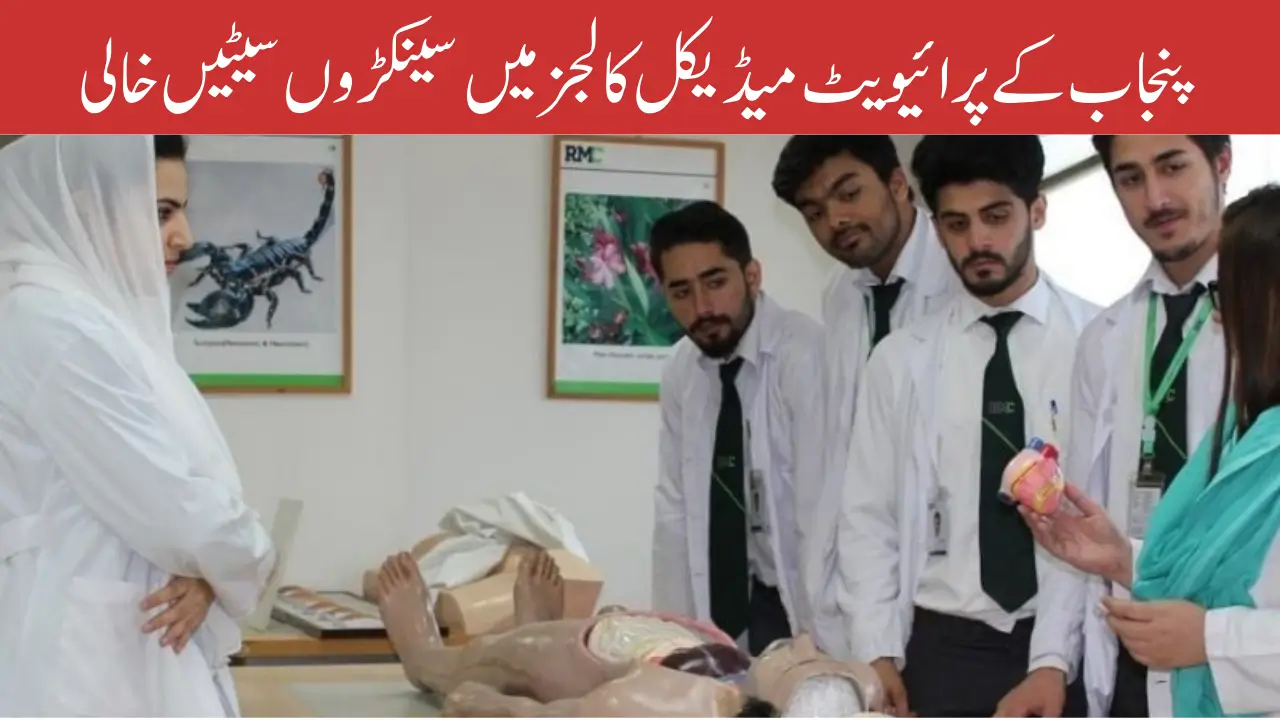
For the first time in Punjab’s history, private medical colleges have failed to fill all their MBBS seats. Even after issuing the fifth admission list, 426 seats remained vacant. This unexpected situation has raised serious concerns about the future of medical education in Pakistan.

Admission records show that 109 students did not enroll at all, while 317 students withdrew after getting admission. This trend clearly reflects a loss of confidence among students who once considered medicine a secure and prestigious career.
Why Students Are Leaving Medical Education
Education experts believe that limited career opportunities are the main reason behind this decline. After completing their degrees and mandatory house jobs, many young doctors struggle to find permanent training positions.
In addition, low salaries discourage students from continuing in the profession. Medical officers working in private hospitals reportedly earn around Rs40,000 per month, which is even lower than the Rs60,000 paid to house officers. This pay gap is alarming, especially when families spend over Rs15 million on medical education.
Overview Of The Current Situation
The following table summarizes the key reasons and impacts of vacant medical seats:
| Key Factor | Details |
|---|---|
| Vacant MBBS Seats | 426 seats remained empty |
| Student Withdrawals | 317 students left after admission |
| Non-Enrolled Candidates | 109 students did not join |
| Education Cost | Exceeds Rs15 million per student |
| Average Salary | Rs40,000–60,000 per month |
| Unemployed Doctors | Estimated 20,000–30,000 |
Quality Issues In Private Medical Colleges
Another major reason behind this crisis is the decline in educational standards at some private medical colleges. Students and experts have raised concerns about strict attendance rules without proper teaching support.
Many colleges lack sufficient clinical exposure, do not have fully functional teaching hospitals, and provide limited hands-on training. These shortcomings directly affect the learning experience and future skills of medical graduates.
Weak Oversight And Regulatory Gaps
Critics argue that weak monitoring by regulatory authorities has allowed several institutions to operate without meeting essential requirements. Poor supervision has resulted in compromised training quality, leaving graduates underprepared for professional challenges.
As a result, the reputation of private medical education has suffered, pushing students to rethink their career choices.
Future Of Medical Careers In Pakistan
Recent estimates suggest that 20,000 to 30,000 doctors are currently unemployed in Pakistan. This alarming figure has made students cautious about choosing medicine as a career path.
Unless job opportunities improve, salaries increase, and education quality is strictly regulated, the number of vacant seats may continue to rise. Addressing these issues is crucial to restoring trust in the medical education system and securing the future of healthcare in the country.